
Coronavirus UK advice for the elderly
 16 Mar 2020
  Community
 By Agency
 Coronavirus is a new virus impacting countries throughout the world. The illness, known as Covid-19 affects the lungs and airways and can be particularly harmful to the elderly and people with pre-existing health conditions. But what are the symptoms of coronavirus and how can we protect those most at risk?
The following information (taken from the NHS, government and BBC websites) explains what coronavirus is, the symptoms and what we can do to protect the elderly.
What is coronavirus?
Coronavirus is a respiratory virus that causes an illness known as Covid-19. The illness can affect anyone and most people will recover quite quickly. However, for the elderly or those with weak immune systems, including people with asthma, diabetes or heart disease, contracting coronavirus could lead to more severe symptoms.
Understandably coronavirus is headline news across the world as countries put plans in place to contain the virus. Having started in China, Covid-19 now has a foothold worldwide with flights being cancelled and entry into many countries banned.
But with the whole of Italy in quarantine and the impending lock down of Spain, what is the UK doing and is it enough to protect its residents?
Latest coronavirus news
Read the latest UK news and from around the world - latest at top
This week
- Find the COVID Rules in your area
- Your COVID questions answered
- The latest Coronavirus numbers in your area
Older news
- Coronavirus UK alert level reduced from 4 to 3
- £1bn for schools to catch up schooling
- Track and trace 75% of people contacted
- Support bubbles for single households - how does it work?
- Why is the social distancing measure 2m?
- Impact of Coronvirus on the housing market
- Face mask coverings to be compulsory on public transport
- How to make your own face masks
- Can masks stop you getting Coronavirus?
- When will NHS contact trace be in place?
- What are the travel quarantine rules in the UK?
- Lockdown easing - now up to 6 people can meet in open spaces
- Track and Trace system goes live
- How does Coronavirus track and trace work?
- Coronavirus government travel advice
- What are the UK coronavirus travel quarantine rules?
- UK airlines warn quarantine will kill air travel
- Is there any evidence that hydroxychlorine (Trump drug!) works?
- Deaths per million of the population by country
- No guarantees that our economy will bounce back - Sunak warns
- Watch this official video on how the virus can spread
- Funeral guidance updated 10th May
- What can I do from 13th April that I couldn't do before?
- Use common sense - keep 2m and stay outside
- How lockdown will change from Wednesday 13th May 2020
- What is Coronovirus RO explained
- Gov response to critical Sunday times article
- Which UK regions have been hit the worst by coronavirus?
- A million vaccines by September?
- Trump to halt funding the World Health Organisation
- Coronavirus in Care Homes latest
- What is Donald Trump saying about the virus is the states
- Government to aim for 100,000 coronavirus tests
- Will my summer holiday be cancelled due to Coronavirus?
- Coronavirus can I do anything to protect myself?
- Impact of coronavirus on arranging funerals
- Covid-19 support for businesses and self employed
- What should I be doing to stop the Coronavirus?
- NHS ramping up capacity
- Lock down - The PM's announcement
- Social distancing - what you need to know
- Britons urged to avoid non-essential travel
- PM Daily Briefing Statement 16th March 2020
- Latest UK coronavirus cases and death toll
- Coronavirus travel advice
- World coronavirus news
- Government to issue daily briefings
- Stock markets fall despite central bank intervention
- New York and Los Angeles in shutdown
Coronavirus prevention in the UK
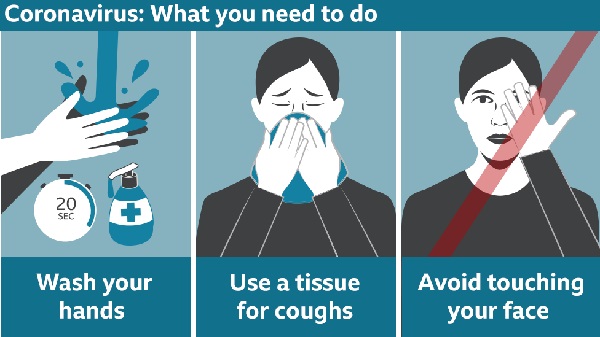
The UK’s approach to coronavirus is based on scientific and behavioral evidence, aimed at delaying the onset of Covid-19 so the NHS can cope. Currently the Governments advice is to:
- Wash your hands regularly for at least 20 seconds using soap or a hand sanitiser
- Cough into a tissue and then throw the tissue away
- Avoid touching your face
- Stay at least 2 metres away from people where possible
- If you can work from home do so
- If you have any coronavirus symptoms, self-isolate for 7 days
- Do not go to your doctor. If your symptoms worsen, call NHS 111 or contact NHS 111 online
This advice will change as the virus takes hold. Possible next steps to delay the spread will most likely include a ban on large gatherings however you can keep up to date with the Governments latest coronavirus news here.
What are the symptoms of coronavirus?
Coronavirus symptoms are as follows:
- A new and continuous cough
- A high temperature
- Shortness of breath
These symptoms are like other illness so do not necessarily mean you have coronavirus. However, if you do have any of these symptoms, you must self-isolate for 7 days to ensure the virus is contained.
If you are concerned about covid-19, the NHS coronavirus symptoms checker will help guide you on the right course of action.
Coronavirus treatment
As coronavirus is new, there is no treatment for it and antibiotics do not work against virus’ anyway. It is therefore extremely important to practice good hygiene and follow the government’s advice.
What should I do if I think I have coronavirus?
If you feel unwell, isolate yourself from other people for 7 days until the virus passes. Do not go to your doctor. There is no need to contact NHS 111 as you will not be tested for Covid-19. However, if your symptoms get worse or haven’t improved after 7 days, contact NHS 111 for more advice.
You should drink plenty of water to keep yourself hydrated and if appropriate, you can use over the counter medication such as paracetamol to help with the symptoms. As always though these should be used inline with the advice on the packet.
What does self-isolation mean?
Self-isolation is important to protect friends, family and especially the elderly and help limit the spread of coronavirus. If you are self-isolating you should:
- Remain at home
- Do not go out to work, the shops or any public areas
- Keep away from other people in the house where possible
- Ask friends or family to buy groceries or order online. The groceries should then be left outside for you to collect. The person making the delivery should not enter your home.
- Stay in a well ventilated room to keep the air clean
- Use your own eating and drinking utensils toothbrushes, towels and bed linen
- Do not share food or drink
If you have a garden or outside space, you may go outside as long as you keep at least 2 metres away from other household members.
Coronavirus advice for the over 70s
Coronavirus advice for the over 70s is currently to follow the government’s hygiene advice. However in future weeks, over 70s may be advised to stay indoors. This next step towards fighting coronavirus could go on for some weeks so understandably the government doesn’t want to impose it too soon.
The strain of remaining indoors for the over 70s is obviously a big concern so it’s important to ensure support networks are available through family, friends and the community.
Should I stop visiting the elderly because of coronavirus?
It’s essential that we protect our elderly from coronavirus however isolation can impact our mental wellbeing. Therefore, if there are no signs of coronavirus, the government advise that you shouldn’t stop going out or meeting people. You just need to be vigilant and adhere to their recommended hygiene practices.
If an elderly person is self-isolating, it’s important to keep in touch with them via the phone, online or by post. Remember you should contact NHS if their symptoms become severe or prolonged.
Mental health charity Mind provide excellent information on how to take care of your mental health and wellbeing during the coronavirus outbreak.
Coronavirus travel advice
Coronavirus is having a huge impact on travel with airlines canceling flights as borders close. Tubes, trains and other forms of public transport have also seen a drop in foot flow. If you are preparing to travel:
- Check the government’s latest travel advice before you go
- Where relevant check you have the necessary travel insurance
- Check with your travel provider whether there are any coronavirus related changes to schedule
- Have a plan B in the event of disruption
Frequently asked coronavirus questions
Should I wear a facemask to protect against coronavirus?
There is currently little evidence to support facemasks as an effective way of coronavirus prevention. It is therefore more important to follow the government’s hygiene practices.
Should I stop going out and seeing people?
If you are showing no coronavirus symptoms, it is ok to continue going out and meeting people. Just remember to regularly wash your hands, use a tissue for coughs, don’t touch your face and where possible, keep 2 metres from people.
What does herd immunity mean?
Herd immunity is usually where most of the population are vaccinated against a disease meaning it’s difficult for that disease to spread.
In the case of coronavirus, there is no vaccination as it’s a new virus. However, herd immunity can occur naturally when the population are exposed to a virus and build up their own immune system, therefore stemming the spread of the illness.
What is the difference between coronavirus and flu?
Flu is caused by an influenza virus, a different strain of virus to covid-19. Both flu and coronavirus are infectious, affect the respiratory system and can lead to pneumonia. However, as flu has been studied by scientists for years, treatments and preventions such as the flu jab are available to keep the spread contained. Therefore the risk is not as great.
Does coronavirus affect cats and dogs?
There is currently no evidence to suggest that cats and dos can be infected by coronavirus.
What should I do if a member of my household contracts coronavirus?
If you live in a household where someone contracts coronavirus, the latest advice is that all household members should self-isolate.
Can you get coronavirus twice?
There is no evidence to support whether you can get coronavirus twice as it’s a new virus. However it is hoped that once you have it, you will build up your own immunity to further contamination.
Is there a vaccine for coronavirus?
There is currently no vaccine for this coronavirus. Scientists are working hard to find one however this could be 12 months away.
Will warmer weather stop the outbreak?
It’s too early to say, but if coronavirus behaves the same as the flu and common colds, then it’s likely to be worse in months where the weather is cooler.